New Delhi, June 16: As Indian businesses race to strengthen their digital presence, New Delhi-based Deltron India is positioning itself at the forefront of a rapidly emerging technology trend: 3D Digital Twins. The company says demand for its immersive virtual-tour platform is growing across sectors ranging from hospitality and healthcare to manufacturing, education, retail, and real estate, reflecting a broader shift in how organizations market, manage, and monetize physical assets.
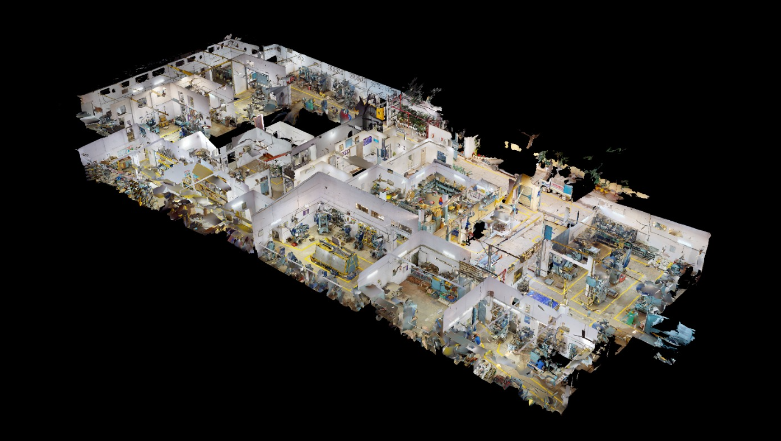
A digital twin is a highly accurate virtual replica of a real-world space, enabling users to explore buildings, facilities, and campuses remotely through interactive 3D environments. Unlike conventional photographs or videos, these digital models provide a detailed, navigable representation of physical locations, complete with spatial measurements and real-world layouts.
Industry observers say the technology is gaining relevance at a time when businesses are seeking ways to engage customers, investors, regulators, and partners without requiring frequent site visits. Deltron India believes this capability has the potential to transform how organizations present and operate their physical infrastructure.
Hospitality Sector Sees New Marketing Opportunity
The hospitality industry has emerged as one of the early adopters of digital twin technology. Hotels, resorts, and event venues are increasingly using immersive virtual tours to allow prospective guests and event planners to inspect facilities before making reservations.
Industry executives note that virtual access to banquet halls, guest rooms, spas, and recreational facilities can help reduce uncertainty for customers and support more informed booking decisions. For convention and event planners, remote venue inspections can significantly cut travel costs and accelerate decision-making.
Healthcare Providers Turn to Virtual Transparency
Healthcare institutions, particularly aesthetic and dermatology clinics, are also embracing the technology to strengthen patient confidence. Virtual walkthroughs allow potential patients to assess clinic infrastructure, treatment areas, and hygiene standards before scheduling appointments.
With increasing competition in urban healthcare markets, providers are looking for new ways to establish credibility and differentiate themselves. Digital twins are emerging as one such tool, especially for attracting patients from outside their immediate geographic catchment areas.
Manufacturing Finds Value Beyond Marketing
While customer engagement remains a key driver, manufacturing companies are deploying digital twins for operational purposes as well. Plant managers are using virtual models for facility audits, safety training, equipment planning, and workforce onboarding.
The technology is also proving useful in international trade, where overseas buyers and quality auditors can conduct preliminary inspections remotely. As global supply chains continue to prioritize transparency and compliance, digital facility access is increasingly becoming part of supplier evaluation processes.
Schools Seek to Engage Digital-First Parents
Educational institutions, particularly pre-schools and play schools, are leveraging virtual campus tours to reach parents who may not have the time to attend multiple physical visits during admission season.
By enabling parents to explore classrooms, play areas, and learning facilities online, schools hope to improve engagement and provide greater transparency about their infrastructure and environment. The approach is proving especially relevant in metropolitan areas where working parents often rely on digital research before making enrolment decisions.
Expanding Applications in Real Estate and Retail
Beyond these sectors, digital twins are finding applications in real estate development, architecture, engineering, construction, and retail operations.
Developers and project consultants are increasingly using the technology for project documentation, inspections, and stakeholder presentations. Retail chains, meanwhile, are employing virtual replicas of stores to support franchise expansion, operational audits, and standardization across locations.
Building a Digital Layer for Physical Assets
According to Deltron India, its platform has been designed to function efficiently under Indian internet conditions and can be accessed through smartphones, tablets, and desktop devices without requiring specialized software. The company argues that every physical asset—from a manufacturing plant to a school campus—can benefit from having a permanent digital counterpart.
As India’s digital economy continues to expand, technologies that bridge physical and virtual experiences are expected to gain greater prominence. For companies such as Deltron India, the opportunity lies in creating what many industry experts now describe as the next frontier of digital transformation: a comprehensive digital layer over the built environment.