
India, Feb 25 : In a vital moment for cross-cultural collaboration, Indian playwright Mahesh Dattani and director Jonathan Taikina Taylor in association with NCPA, are bringing a queer epic, The Monk & The Warrior. The play starts with the historically accurate encounter between Alexander the Great and a Bodhisattva monk, which explodes into a love story that traverses culture, space, and time, weaving together queer histories across centuries and civilisations. The play is slated for only six shows from April 2nd to April 5th, 2026 at NCPA.
Contemporary politics prioritise a narrowed telling of history and mythology, ignoring identities and desires that don’t support their narratives. The Monk & The Warrior explodes this oppressive framework by leading audiences through a fantastical, episodic journey into India’s queer histories. It revisits several folklores such as Chandravati and Malavati and Shams and Rumi, amongst others, to propose what some might say is quite radical: Queerness is not a Western construct. It is a traditional part of Indian culture.
The play is a defiant tale of the meeting between Alexander the Great and the Bodhisattva. One seeks to conquer the world while the other longs to want for nothing. It is an interplay of curiosity and desire, a conflict between ambition and transcendence, and a dream of a blooming relationship.
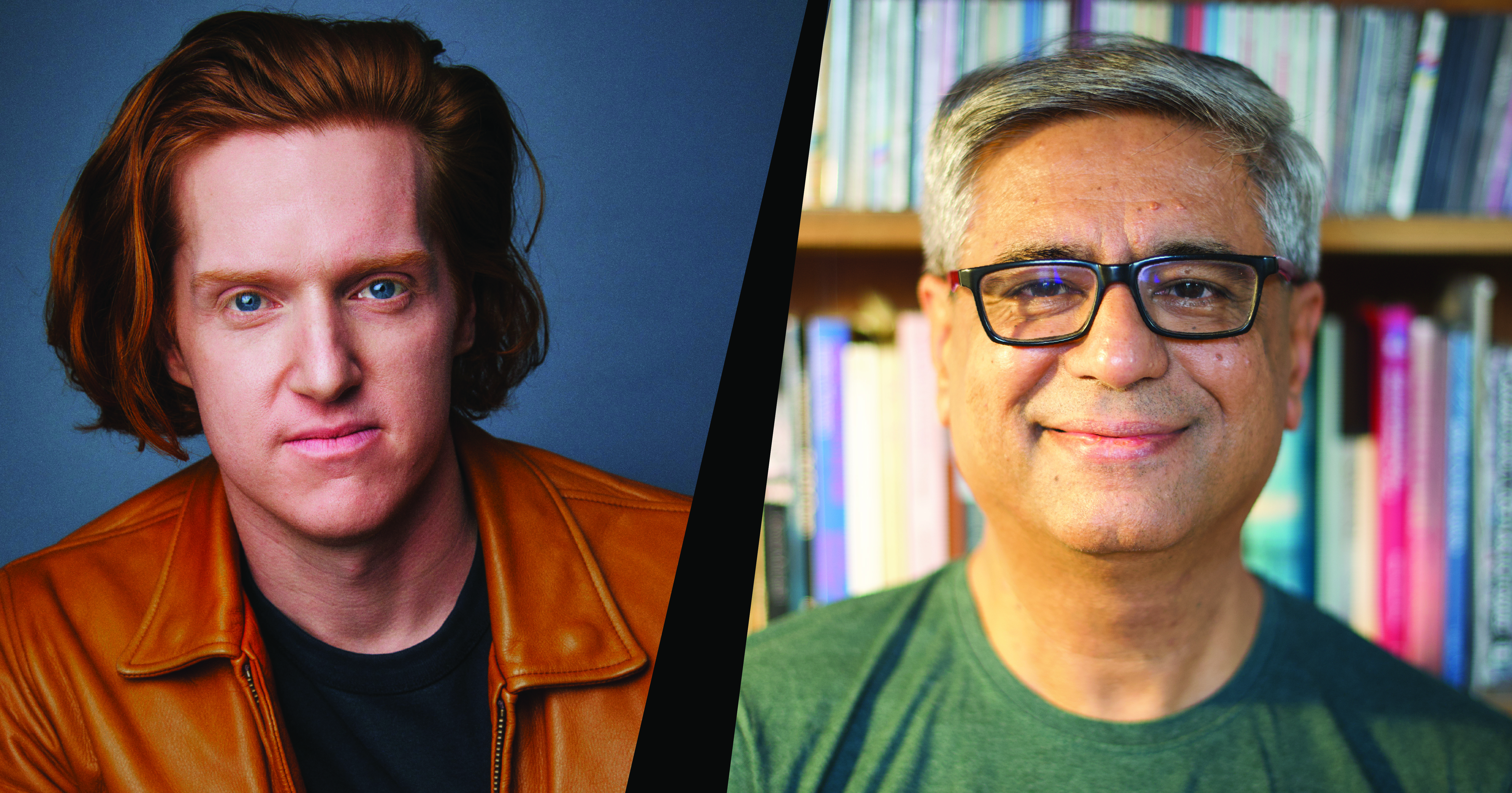
It is conceived and directed by Jonathan Taikina Taylor, a Brooklyn-based creative extraordinaire, who is responsible for directing The SuperGeographics’ work across the USA, Sweden, Peru, Chile, and India. He is collaborating with celebrated Indian playwright and Sahitya Akademi awardee Mahesh Dattani. Through this play, cultures are able to collide together to uplift the voices and stories of pervasively marginalised people and cultures.
Talking about creating this queer epic, Jonathan Taikina Taylor, Director, said,
“The Monk & The Warrior is about the impossibility of meeting another person across disparate cultures and of loving. Cultures of countries yes, but also cultures of gender, of belief, of desire, and of shared experience. It is the result of seven years of research and collision with a culture very unlike my own but that has welcomed me in a conversation. In an era of extreme and unnecessary polarization, artists are required to reach out across chasms of difference and imagine new ways forward. That process has been immensely challenging and joyful.
Mahesh Dattani added,
“In The Monk & The Warrior, I wanted to explore the profound collision between the pursuit of spiritual self-realisation and the brutal reality of imperialism. History often romanticises conquerors, but this play strips that myth away to confront Alexander not as a hero, but as a genocidal force, a ‘killer of human souls’, leaving countless orphaned children and ravaged lives in his wake. Against this backdrop of violence, the play champions radical non-violence and weaves a deeply personal narrative of queer love. I have always believed that many of our traditional Indian stories hold an inherent queerness, which we lean into through narratives like the fluid, transformative rituals of Aravan’s brides and the Bodhisattva’s own acknowledgement of his ‘queer feelings’. Ultimately, the monk’s journey is a struggle toward absolute self-compassion, asking the audience a difficult question: can the quiet, resilient power of love and non-violence truly disarm the relentless machinery of war?”
From India to Chile to Australia, the production boasts cast members from across the globe. It includes Sachin Ravindran, Prethora, Caitlin George, Manjari K, Juan Diego Bonilla, and Harsh Tharad. Eero Hämeenniemi, a Finnish composer, has composed the music for the play. Additionally, Tomás Carrasco Gubernatis, a composer and Chilean woodwind player, along with Prasoon Bhargava, an Indian musician and actor, will be performing live.
The Monk & The Warrior is shaped by a collision of cultures in conversations with artists from around the world. It is an explosion of movement and music; a celebration of difference. Through stories across centuries and cultures, the audience will not be confined to a singular narrative but will explore a radical proposal for how to come together in difference