
Kolkata, Dec 06: The Indian Chamber of Commerce’s 3rd Rail India Forum in Kolkata presented a consolidated roadmap for lowering logistics costs, improving freight efficiency, advancing green energy adoption, and accelerating expansion of rail, port and metro-based transport systems to meet India’s 2030, 2040 and Viksit Bharat 2047 goals. Senior officials from Eastern Railway, Syama Prasad Mookerjee Port, RVNL and industry participated.
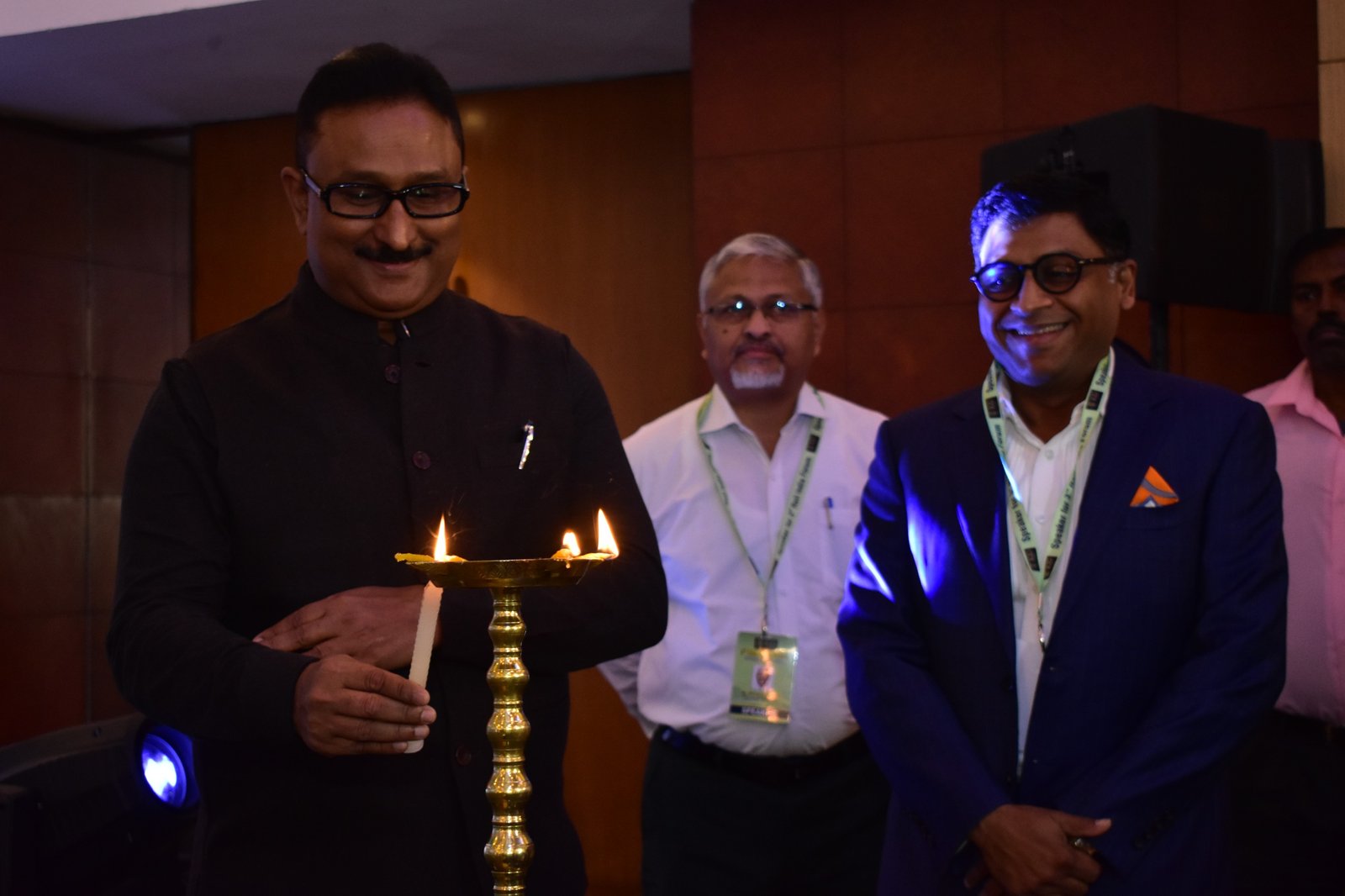
Eastern Railway General Manager Mr. Milind Deouskar said the starting point for greening railways is reassessing freight patterns. “Before deciding how to transport, we must examine what truly needs transporting,” he said, citing India’s 200 million tonnes of annual iron ore movement across difficult terrain such as the 400-km KK line. He proposed reducing coal transport through pithead-based power plants and considering coal gasification.
He stated that logistics costs have decreased from 13–14% of GDP to about 8%, with potential for another 2–3% reduction. Rail efficiency remains high: a mail/express train consumes 20 units of electricity per kilometre, costing around ₹100 per km to carry 2,000 passengers. Rail freight is competitive for 500–600 km leads in a country spanning 3,000 km north–south and 3,000–3,500 km east–west. Railways move 1,500–1,700 million tonnes annually and aim to increase volumes despite lower foodgrain movement.
With 98–99% electrification, he said the next focus is reliability, addressing OHE failures, intermittent power, and developing lighter 2×25 kV systems. He urged using reliable rolling stock (MEMUs, EMUs, multi-unit locomotives) and avoiding short-life, vendor-dependent technologies. On energy transition, he said, “Solar power is promising, but storage costs ₹6–7 crore per MW.” Solar on railway land, including water bodies and tracks, feeding traction substations directly, along with exploration of small modular nuclear reactors, were identified as options.
Syama Prasad Mookerjee Port Chairman Mr. Rathendra Raman stressed rail-port integration. “Kolkata and Haldia have supported trade for 145 years,” he said, noting 20 km of track in Kolkata and 125 km in Haldia. The port targets 25% solar energy by March 2026 and 50% by 2030. Initiatives include electric mobile harbour cranes, EV charging for tractor-trailers, shore power for vessels, and maintaining 40% green cover. Haldia’s rake-loading time has been reduced from 12–14 hours to two hours. Rail-yard electrification and 42 tenders for modernising 80 sidings are underway. To facilitate modal shift, haulage, stabling and terminal charges have been reduced. The Port Rail Link Express moves 45 rakes monthly between Haldia and Kolkata, each with around 90 containers.
He sought policy support for ports to operate their own wagons and retain Nepal-bound cargo, along with increasing volumes from Odisha, Jharkhand and West Bengal. Investments include ₹130 crore for road and rail overbridges with railway support.
RVNL Chief Project Manager Mr. Vipin Kumar said mass transit and multimodal connectivity are essential for a USD 30 trillion economy by 2047. Targets include 10 million km of roads, 10,000 km high-speed rail, 5,000 km metro, expansion of airports from 150 to 500+, and major port and waterway upgrades. India currently has 1,036 km of metro in 24 cities and 779 km under construction, carrying 11.2 million passengers daily, compared with China’s 11,000 km and 70 million daily ridership.
He said the Joka–BBD Bag corridor will initially serve 5 lakh passengers per day, rising to 7.66 lakh, removing 34,000 vehicles by 2025, saving 17 million litres of fuel and reducing 139,000 tonnes of CO₂ yearly. Green features include solar power, LED lighting, efficient HVAC, water harvesting and 5:1 compensatory tree planting. The Mominpur–Esplanade underground stretch will use 5 lakh m³ concrete (3 lakh m³ with supplementary cementitious material) and 1.3 lakh tonnes of steel, saving 27,000 tonnes of cement and 24,000 tonnes of CO₂. Interchanges such as Majerhat will link the metro, Eastern Railway and buses within 1–2 km.
ICC Railways Committee Chairman and Jupiter Wagons DMD Mr. Vikash Lohia highlighted Indian Railways’ progress: 68,000 km electrified (98% of broad-gauge), 6,500 km track renewals, 8,500 turnout renewals and 2,000 km new track enabling 130 km/h speeds in 2024. Renewable additions include 209 MW solar for non-traction and ongoing wind projects. He said lowering logistics costs to 7–8% of GDP through freight modal shift “remains the core priority,” with hydrogen, energy-efficient technologies and expanded electrification forming the greening pathway.