
New Delhi, Feb 16: In the wake of the recent Suo Moto judgment, a panel of parliamentarians, legal experts, activists, administrators, and civil society leaders convened to discuss a coordinated, humane, and constitutionally sound approach to street dog management in India. The discussion highlighted the urgent need to move beyond polarization and implement scientific, transparent, and community-focused solutions.
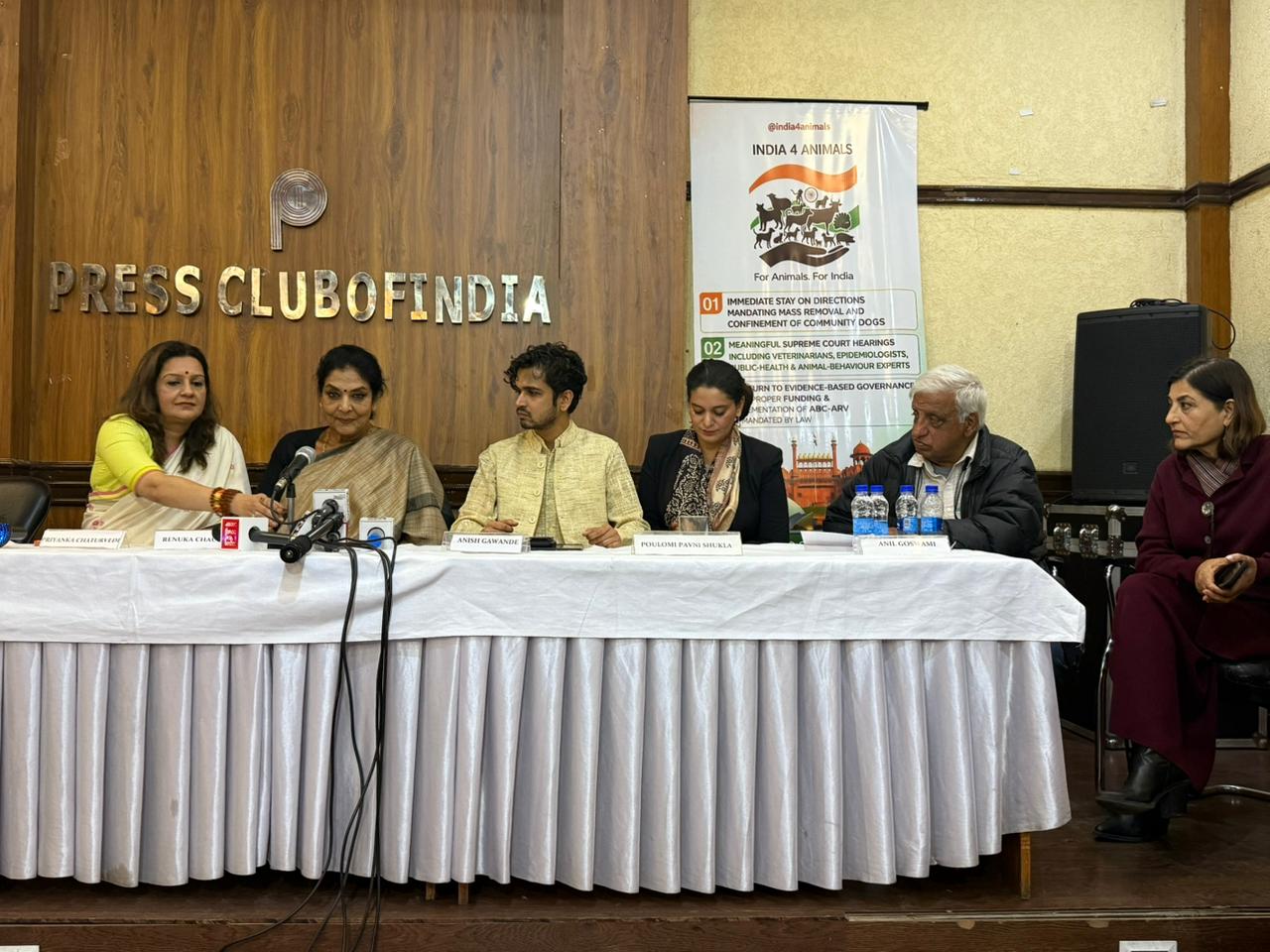
The panel acknowledged that the judgment has deepened tensions between community caregivers and those advocating the permanent removal of street dogs, resulting in increased violence against animals and harassment of feeders. The discussion underscored two critical realities: the Animal Birth Control (ABC) programme has been underfunded and underutilized, and permanent mass sheltering is neither sustainable nor humane.
Key Voices and Insights
- Renuka Chowdhury, MP (INC): Highlighted the link between cruelty to animals and humans, stressed the need for stronger laws, adoption drives, multilingual awareness campaigns, and government accountability.
- Priyanka Chaturvedi, MP (Shiv Sena UBT): Advocated for technological integration, auditable municipal spending, public-private partnerships, and cross-party collaboration to improve sterilization and vaccination coverage.
- Anish Gawande, MP (NCP): Urged proper implementation of the ABC programme and unified public advocacy for municipal accountability.
- Anjali Gopalan, Activist: Emphasized political will as critical, citing international examples of effective adoption drives and breeding control.
- Adv. Poulomi Pavini Shukla: Linked child welfare with animal welfare, cautioning against large-scale sheltering and advocating community-based ABC programmes.
- Robin Singh, Peepal Farm: Proposed a grid-based sterilization model starting at the village level and expanding outward, combined with early education to instill empathy.
- Adv. Aishwarya Singh, Delhi High Court: Highlighted gaps in post-bite care awareness and called for public education campaigns.
- RWA & Civil Society: Advocated unified community platforms to demand municipal accountability and promote local awareness initiatives.
Key Resolutions from the Panel
- Immediate and adequate funding for the ABC programme.
- Transparent dashboards and auditable municipal spending.
- Centre–State coordination and cross-party collaboration.
- Strict regulation of illegal breeding and abandonment.
- Public awareness campaigns on vaccination and post-bite care.
- Education initiatives fostering empathy from early childhood.
- Formation of an expert advisory committee to guide the judiciary on scientific street dog management.
Conclusion
The panel reinforced that street dog management is not a conflict between animals and humans, but a matter of governance, accountability, empathy, and scientific implementation. Coordinated action, transparency, and community engagement were emphasized as the path forward.