
Panaji, Mar 09: In view of the increasing concerns over the adverse impact of social media on children, the Department of Information Technology, Electronics & Communications (DITE&C), Government of Goa, convened a meeting with key stakeholders to deliberate on the matter and explore possible regulatory safeguards, following discussions held on 5th March 2026.
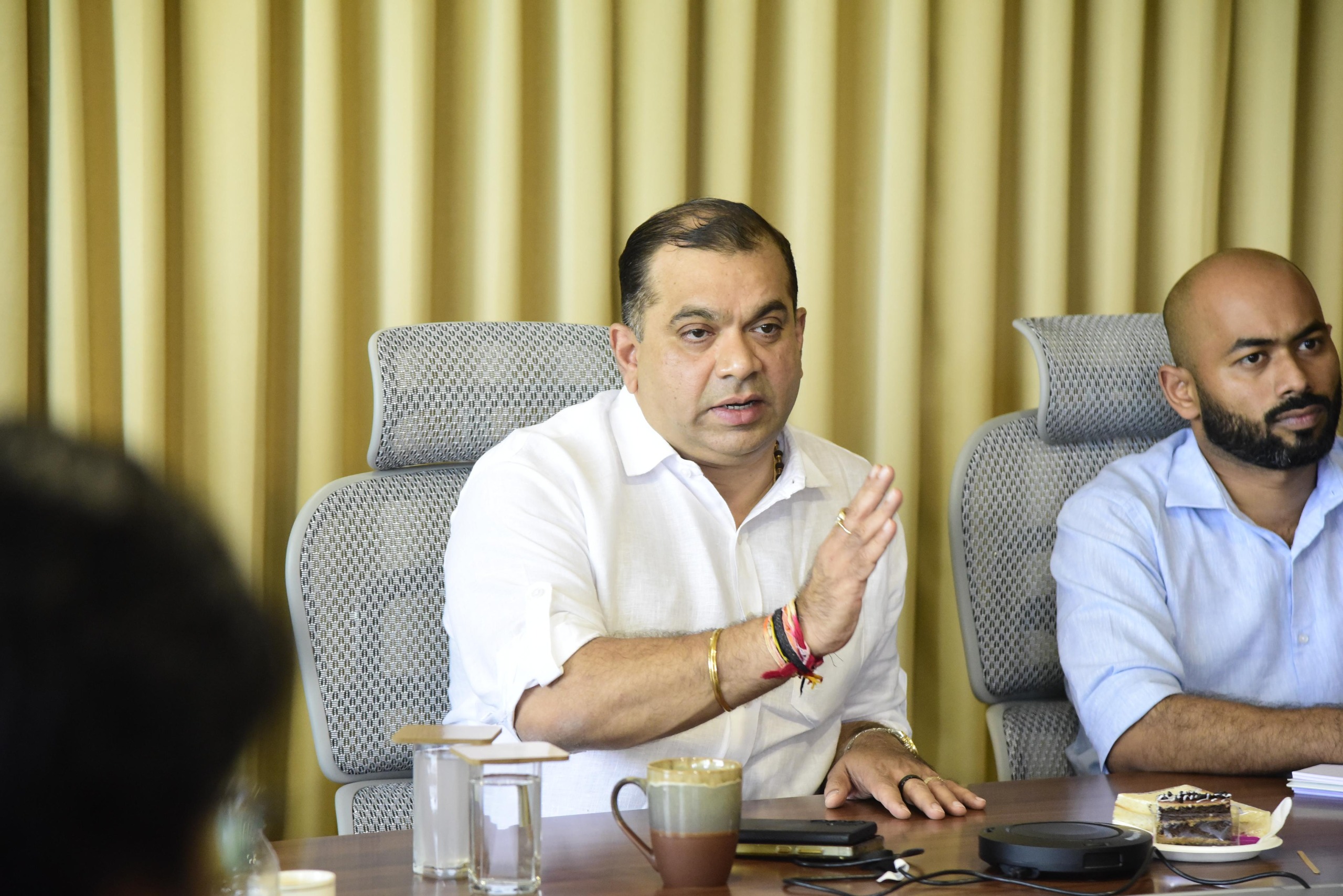
The meeting was held at Paryatan Bhavan, Patto, Panaji, on the theme “Impact of Social Media on Children and Regulatory Safeguards for Child Safety.” It was chaired by Minister for Information Technology, Electronics & Communications, Shri. Rohan Khaunte.
Also present were Shri. Santosh Sukhadeve, IAS, Secretary IT, Shri. Kabir Shrigaonkar, Director, DITE&C, Shri. Rahul Gupta, Superintendent of Police, Cyber Crime Cell, Ribandar; Shri. Praveen Volvotkar, MD, ITG; Smt. Revati Kumar, CEO & ED, GEL; Shri. D.S Prashant, SITPC; Shri. Neville Noronha, OSD to Minister IT; Shri. Arvind Budge, Joint Secretary Law, Law Department Secretariat; Dr. Kavita Asnani, Associate Professor, Directorate of Higher Education; Shri. Bhavneet D’Souza, Headmistress, Jnyan Vikas School; Dr. Nishank Halarnkar, PTA member, Dr. K.B. Hedgewar School; Smt. Ambika Dhakenkar, Deputy Director, GCCI; Shri. Chinmay Kamat, Secretary, GTA; Shri. Royam Carvalho, Director, ASSOCHAM, Goa; Smt. Darshana Kossambe, Asst. Director, ASSOCHAM, Goa; Shri. Fabio Fernandes, Executive, ASSOCHAM, Goa; Smt. Meena Parulekar, ASSOCHAM Goa; and Shri. Prajyot Mainkar, CEO, Sofueled.
With children increasingly exposed to digital platforms, the discussion highlighted emerging concerns such as rising digital dependency, reduced attention spans, cyberbullying and access to inappropriate online content. A concept note was presented outlining key issues and possible approaches, including examples of regulatory measures adopted in other countries. It was noted that there is currently no single comprehensive framework in place globally to address these concerns.
Speaking on the occasion, Shri. Rohan Khaunte emphasised the urgency of the meeting in light of the rising instances of child abuse and bullying, as well as the growing risks and vulnerabilities children face on social media today.
The Minister stated,
“Children today are often introduced to mobile phones at a very young age, which can eventually develop into an addiction. It’s therefore important for parents to take responsibility, closely monitor their children’s activities and instill good cyber hygiene from an early age. As a State, we must bring together academia, industry and government to create a comprehensive document. Goa needs to strike a balance between enabling access to educational digital tools while identifying and regulating platforms that may be detrimental to children. Through the Hon’ble Chief Minister of Goa, Dr. Pramod Sawant, we will take these recommendations to the Central Government.”
Several suggestions were put forward during the meeting, including the introduction of parental controls and application-level filters, restrictions on the use of mobile phones in schools, awareness programmes for parents and the need to collect data on the social media platforms most used by children in the State. It was also emphasised that social media platform owners must bear the responsibility of implementing a technological framework to restrict access for children below the age of 16.
Participants also acknowledged that while restrictions may be necessary, social media platforms also support a growing community of content creators and represent a source of revenue. It was further noted that digital and emerging technologies, including Artificial Intelligence, are being encouraged at education level.
Shri. Rahul Gupta, shared that over the past two years, six cases involving children as victims of cyberbullying and related offences, including photo morphing, have been reported. He emphasized that parental awareness is critical and suggested that awareness programmes could be conducted through educational institutions, Parent-Teacher Associations (PTAs), workshops and in coordination with the Department of Women and Child Development. Representatives from industry associations also suggested collaborating with technology companies to explore solutions such as age-detection technologies.
After the deliberations, it was decided that the State will formulate a policy document containing recommendations, expressing its intent to address this growing social challenge. This meeting marks the beginning of a consultative process. Stakeholders have been requested to submit their recommendations to the Department within the coming days. The recommendations will be deliberated further in subsequent meetings planned towards the end of the month.
