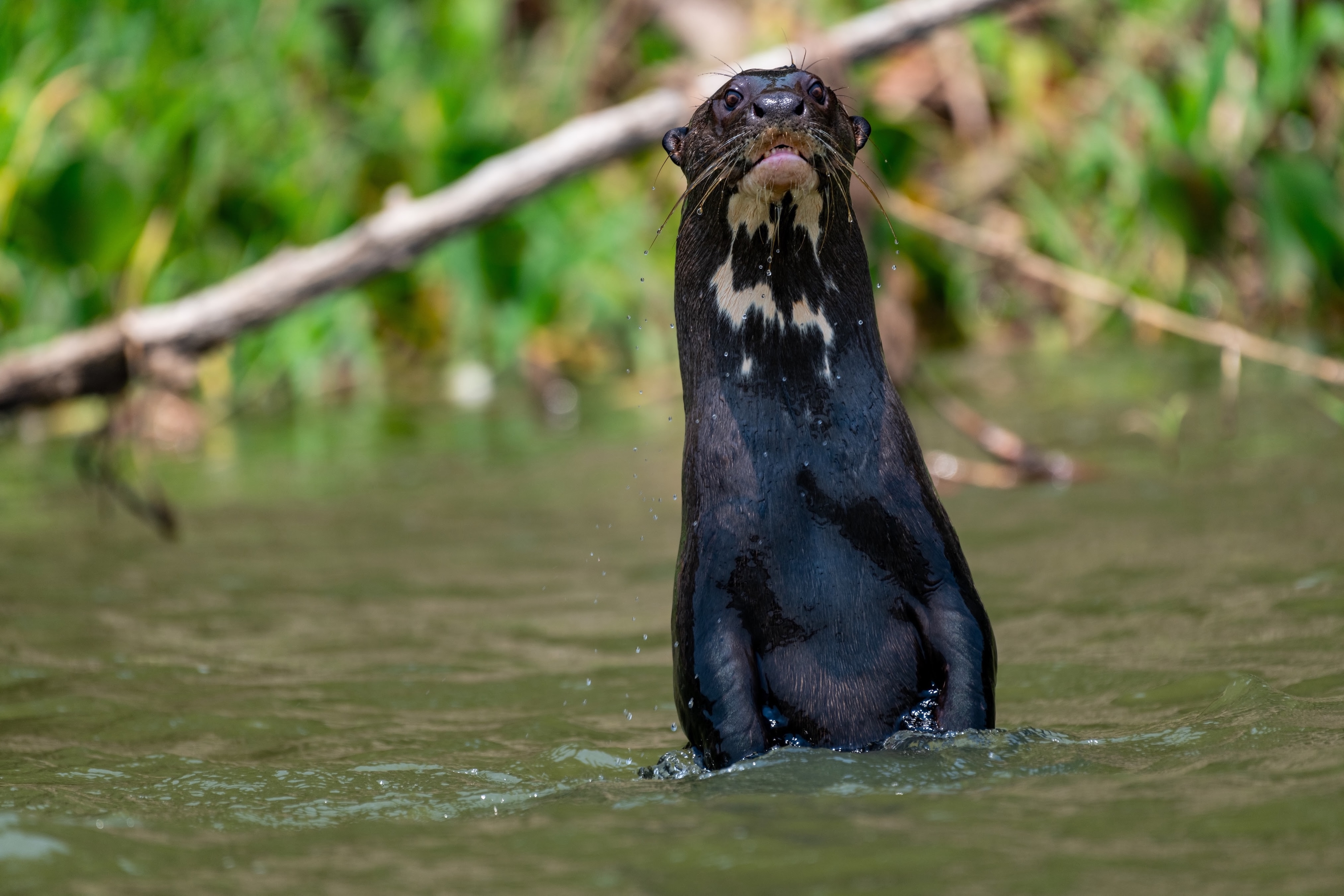
Photo credit: Omar Torrico ©️WCS
CAMPO GRANDE, BRAZIL, March 23, 2026—The Wildlife Conservation Society (WCS) is supporting a proposal to secure for this endangered species the highest level of protection under CMS while strengthening international cooperation across its range in the Amazon, Orinoco, and Pantanal river basins.
Proposal 30.2.3 would list the giant otter (Pteronura brasiliensis) on both Appendix I and Appendix II of the Convention on the Conservation of Migratory Species of Wild Animals (CMS), as governments prepare to convene for the 15th meeting of the Conference of the Parties (CoP15) in Campo Grande, Brazil, from March 23–29.
Often described as a sentinel of freshwater ecosystem health, the giant otter depends on intact, connected river systems that cross national boundaries. Its decline reflects mounting pressures on these ecosystems, including habitat loss, fragmentation, human disturbance, and the expansion of illegal and artisanal gold mining, which contaminates waterways with mercury.
“Listing the giant otter on both Appendix I and Appendix II of CMS will send a clear signal that urgent, coordinated international action is needed to conserve this species and the freshwater ecosystems it depends on,” said Susan Lieberman, Vice President for International Policy at WCS. “Appendix I status requires strict protection and prohibits take, while Appendix II enables the cross-border collaboration that is essential for species that move through shared river systems.”
Giant otters have experienced significant population reductions across much of their range, now occupying only about 60 percent of their historical distribution. Conservation experts have identified priority areas for protecting remaining populations, underscoring the importance of maintaining connectivity between river systems and safeguarding critical habitats.
“Following decades of major range contraction due to illegal trade in skins, giant otters are now largely restricted to a few stronghold populations in the Amazon, Orinoco, and Pantanal biomes and many of these strongholds are transboundary across two or more countries,” said Rob Wallace, Senior Conservationist with WCS Bolivia.
Added Wallace, “Now, these very same strongholds are under threat from illegal gold mining, associated habitat loss, forest fires, climate change, and disturbance. Protecting this species requires protecting entire freshwater river systems—and that can only happen through coordinated action among countries that share these waters.”
The CMS listing would require range states to implement stronger protections, monitor populations, and report on conservation status, helping to build a more coordinated and transparent approach to safeguarding the species. It would also support broader global efforts to ensure that any use of migratory species is legal, sustainable, and safe.
The upcoming CMS CoP15 meeting comes at a critical time, as many migratory species worldwide continue to decline. By elevating protections for the giant otter, WCS and its partners aim not only to secure the future of a charismatic and ecologically important species, but also to advance conservation of the rivers, wetlands, and forests that sustain biodiversity and human communities alike.
