Bhubaneswar, Nov 21 (UDN): In an era dominated by Instagram reels, YouTube videos and on-demand streaming, television may appear to be losing its place in the daily lives of younger audiences. Yet, even among Generation Z and children who have grown up with smartphones, the traditional television screen continues to retain its appeal.
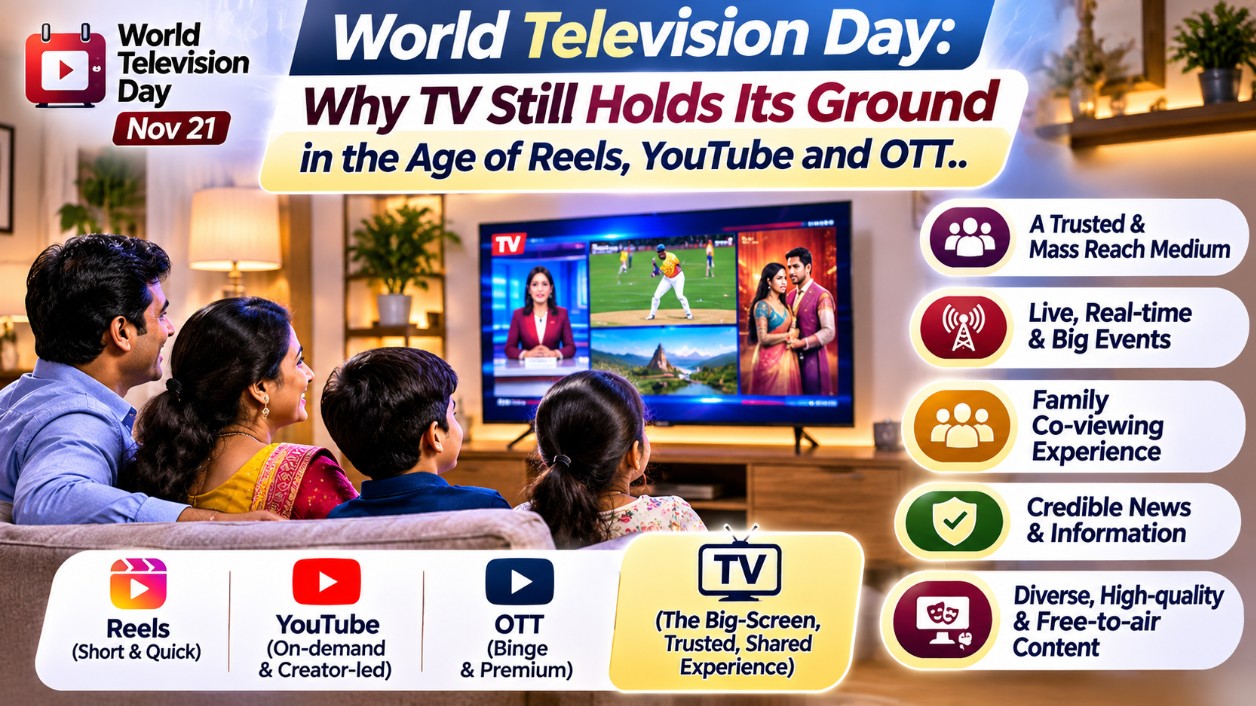
Representational Image
From cartoons and films to live sports, news and cultural programmes, television offers an experience that short-form digital content cannot entirely replicate. Its ability to bring families together, deliver detailed information and create shared viewing moments continues to give the medium a distinct place in the digital age.
As the world observes World Television Day on November 21, the occasion offers an opportunity to reflect on how television has evolved and why it remains relevant despite the rapid growth of digital platforms.
From black-and-white screens to the digital era
Television has undergone a remarkable transformation since its early days of black-and-white broadcasts. High-definition screens, smart TVs, digital channels and internet-based services have changed both the way programmes are delivered and how audiences consume them.
The United Nations General Assembly proclaimed November 21 as World Television Day in 1996, marking the significance of the first World Television Forum held on November 21 and 22 that year.
The observance recognises television's influence on public opinion, communication and awareness of important social, political and global issues.
Over the decades, television has moved beyond entertainment to become an important source of information, education and public engagement.
Why television still matters to Gen Z
Younger audiences increasingly turn to smartphones and social media for quick updates, entertainment and information. Short videos and streaming platforms offer convenience and personalised content, making them an integral part of modern media consumption.
However, television provides a different kind of viewing experience. News bulletins, documentaries, debates and special reports can offer greater context and sustained coverage of events, while live broadcasts allow viewers to follow major developments as they unfold.
Television also continues to connect generations. Families often share the experience of watching films, sporting events, serials and special programmes, creating moments that go beyond individual screen time.
For many children, cartoons and movies on television remain a familiar source of entertainment even as mobile devices become increasingly accessible.
Akshita, a Class IV student from Bhubaneswar, said she enjoys watching cartoons and films on television during her leisure time despite being familiar with smartphones and social media.
Her preference reflects how traditional television can continue to appeal to young viewers alongside newer digital platforms.
Credible broadcasting in an age of viral content
The growing popularity of social media has made information more accessible, but it has also increased concerns about misinformation, misleading clips and unverified viral claims.
In this environment, responsible television journalism and credible broadcasting continue to have an important role. Professional news coverage, fact-based reporting and in-depth discussions can help audiences understand developments beyond the headlines and short clips circulating online.
Television also remains a platform for public awareness campaigns, educational programming and stories that bring social issues into the public conversation.
An evolving medium, not an outdated one
The rise of OTT platforms and mobile-first entertainment has changed television's traditional dominance, but it has also pushed broadcasters to adapt. Many television networks now offer digital streaming, mobile applications and online content, allowing audiences to access programmes across multiple screens.
Rather than disappearing, television is becoming part of a wider media ecosystem in which traditional broadcasting and digital platforms increasingly coexist.
On World Television Day, the message is not simply about preserving an old medium. It is about recognising television's continuing ability to inform, educate, entertain and connect people across generations.
The screen may have changed, and the way audiences watch may be different, but television's place in the media landscape is far from over.