Chennai, Nov23: Smt Punya Salila Srivastava, IAS, Secretary, Department of Health and Family Welfare, Government of India, inaugurated new healthcare infrastructure at Indian Institute of Technology Madras on Sunday. They include an Autism Lab, an E-Ambulance service and a dedicated Sleep Research Facility.
These initiatives are part of IIT Madras’ broader institutional wellness programme, which aims to improve access to healthcare services for students, faculty, staff and other members of the campus community, while creating opportunities for interdisciplinary research and indigenous healthcare technology development.
Highlighting the benefits of the new facilities, Smt Punya Salila Srivastava, IAS, said,
“I am extremely happy to inaugurate these important initiatives at IIT Madras, which bring together preventive healthcare, traditional medical knowledge and modern technology. The focus on mental wellness, sleep research, scientific evaluation of Indian medical practices and accessible emergency care is highly commendable. I hope these initiatives will lead to affordable, indigenous and evidence-based healthcare solutions benefiting society at large.”
Further, Prof. V. Kamakoti, Director, IIT Madras, said,
“At IIT Madras, we believe that institutional excellence must go hand in hand with the health and well-being of our community. These initiatives integrate specialised healthcare, traditional Indian medical knowledge and cutting-edge engineering research to develop innovative and affordable healthcare solutions. We aim to make IIT Madras a model for translating interdisciplinary research into meaningful societal impact.”
The newly-established sleep study facility at the Institute’s Campus Health Centre addresses concerns around sleep deprivation among students and other campus members.
The concern was identified through the Institute’s existing mental health support services, established with the assistance of Kauvery Hospitals, Chennai. These services provide access to counsellors, clinical psychologists and psychiatrists. A 24×7 counselling facility, operated by Myndwell, Chennai, is also available to students.
The Sleep Study Facility will enable individuals to access specialised assessment, consultation and treatment through experts associated with Kauvery Hospitals. Beyond healthcare delivery, the facility will support research into sleep patterns and different categories of sleep disorders, subject to Institutional Ethics Committee approval and informed consent.
The Department of Medical Science and Technology at IIT Madras will also explore the development of indigenous, affordable sensors and technologies for sleep monitoring and analysis, with potential applications in healthcare and entrepreneurship.
The Autism Lab initiative is part of the proposed activities of the Centre for Indian Medical Knowledge at IIT Madras, which seeks to bring traditional Indian medical practices into the ambit of scientific research and validation.
As part of this effort, IIT Madras plans to collaborate with the Paediatric Neurology team at AIIMS Jodhpur to study and scientifically evaluate Integrated Varmam Therapy for children with Autism Spectrum Disorder. AIIMS Jodhpur has shared its clinical experience of administering this integrated therapy to more than 800 children. The proposed collaboration will facilitate the exchange of clinical expertise and research findings to develop evidence-based best practices.
A key technological component of this initiative will be the development of indigenous pressure-sensing gloves by IIT Madras researchers. These devices will measure contact pressure and provide real-time feedback to practitioners, helping ensure adherence to prescribed treatment parameters. The Centre also plans to undertake genetic, molecular and epigenetic research to investigate possible mechanisms underlying the therapy and correlate molecular findings with observed clinical outcomes, following the necessary ethical approvals.
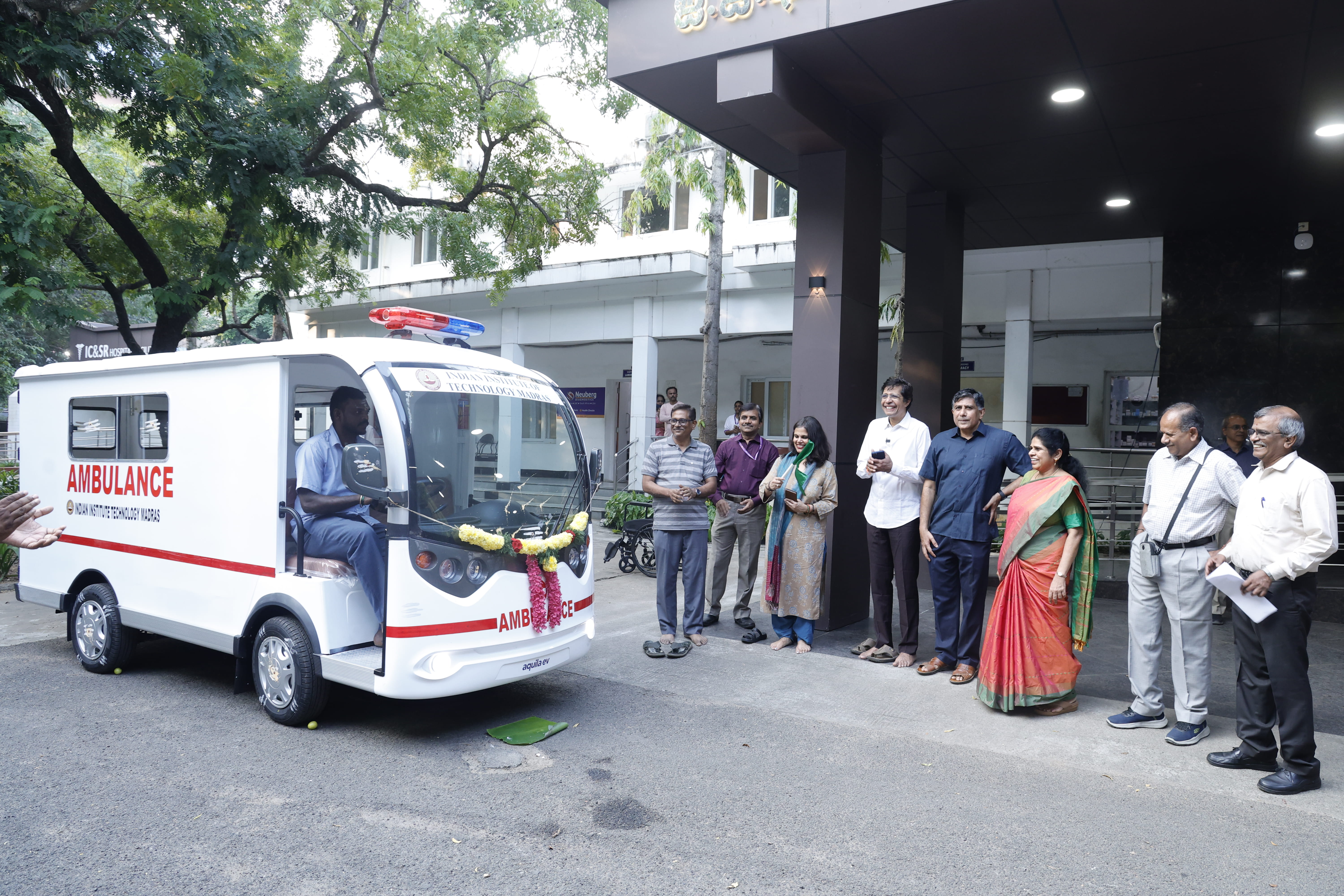
The Institute also introduced an E-Ambulance service to improve access to medical assistance within the campus. The electric ambulance will facilitate quicker response to medical assistance calls and provide convenient transportation for patients, particularly elderly members and those requiring immediate assistance. This service will complement the Institute's existing fleet of two small ambulances and one fully equipped turbo ambulance.