
Kolkata, Mar 12: Corporate social responsibility (CSR) initiatives in India must move beyond symbolic philanthropy and evolve into structured, measurable interventions capable of delivering long-term social transformation, speakers said at the 8th Social Impact Summit and Awards organised by the Indian Chamber of Commerce (ICC).
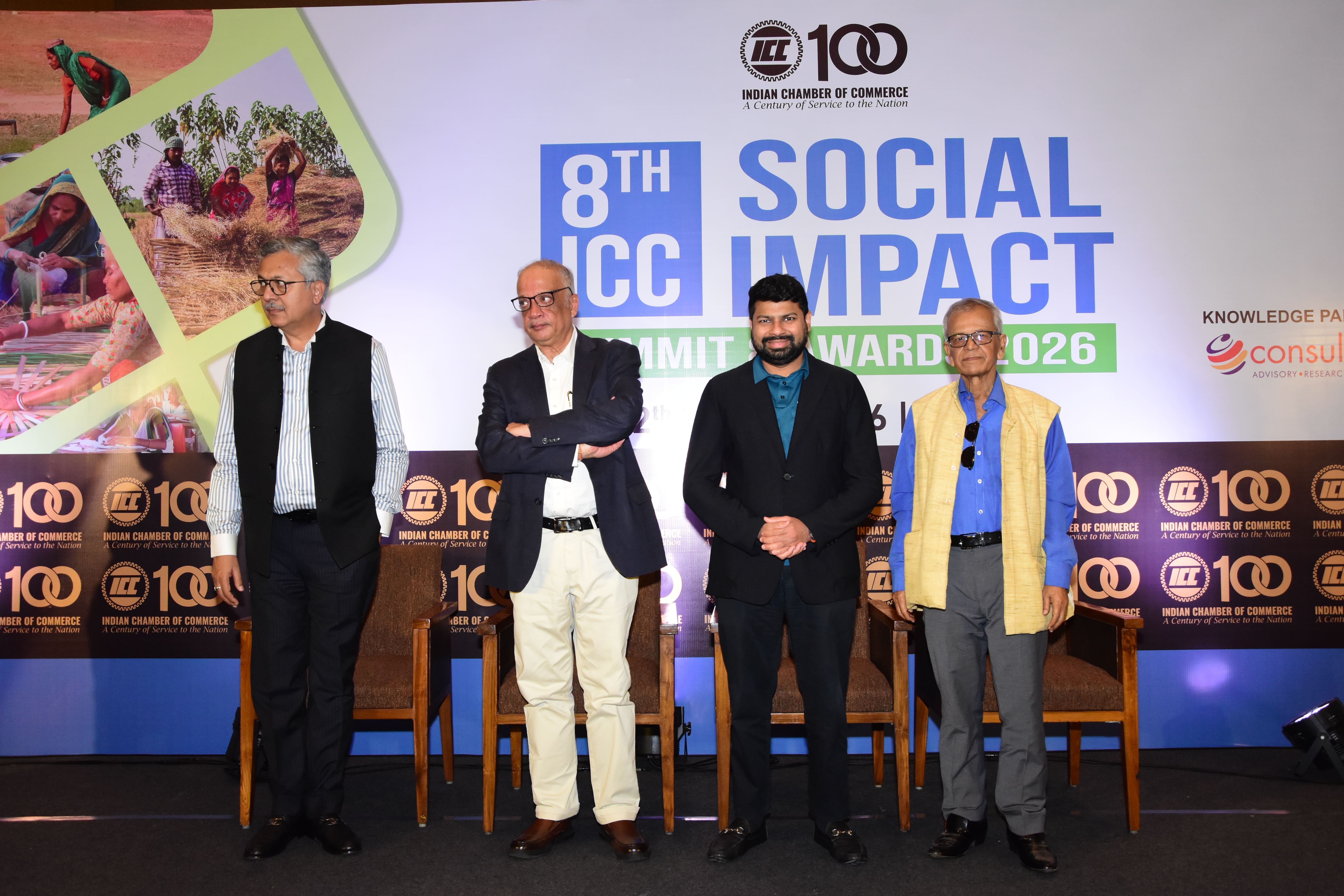
The summit brought together experts from diverse sectors who emphasised the importance of evidence-based impact assessment, technological innovation and collaborative development models to ensure inclusive growth.
Addressing the valedictory session, Keshav Bhajanka, Vice President of the Indian Chamber of Commerce and Executive Director of Century Plyboards (India) Ltd., said social impact initiatives must focus on measurable, sustainable and scalable outcomes rather than merely fulfilling compliance requirements.
“Inclusive growth is both an economic and social imperative as India undergoes rapid transformation,” Bhajanka said, underlining the importance of collaboration between government, industry and civil society to address social challenges.
He noted that India has lifted around 270 million people out of poverty between 2011 and 2023. CSR and philanthropic funding averaging ₹50,000 crore annually continue to strengthen the country’s social development ecosystem, particularly in education, healthcare and rural development, he added.
Speaking at the summit, Prof. SP Gon Chaudhary, President of the National Board for IT Research and Training (NBIRT) and Mission Innovation Champion at Mission Innovation, highlighted the importance of sustainable technologies and innovation in achieving long-term development goals.
“Achieving sustainable development requires strong focus on sustainable technologies and innovation across sectors,” Chaudhary said.
He pointed out that India has made significant progress in renewable energy, with more than 140 GW of solar installations and a national target of achieving 500 GW of renewable energy capacity by 2030. According to him, this transition is creating vast opportunities for industries, startups and young entrepreneurs.
Chaudhary added that the expansion of solar and wind energy, development of large solar parks, green power corridors and hybrid renewable projects will play a crucial role in reducing dependence on coal-based power.
He also highlighted the role of energy efficiency initiatives such as LED lighting, star-rated appliances and rainwater harvesting. The rapid growth of electric vehicles and advances in battery technologies—including lithium-ion, lithium iron phosphate and sodium-ion batteries—are further accelerating the shift towards cleaner energy systems, he said.
Pointing to emerging trends, Chaudhary said green buildings, low-carbon construction materials and passive solar architecture are becoming important contributors to sustainability. He stressed that greater investment in research and technological development will be essential to meet climate goals.
“Collective action from researchers, industry, entrepreneurs and society is essential to achieve net-zero emissions by 2070 and protect the planet for future generations,” he added.
Dr Kunal Sarkar, Director and Senior Consultant Cardiac Surgeon at Manipal Hospitals, commended organisations, NGOs and corporates recognised at the summit for creating meaningful social impact in communities that often lack basic amenities and opportunities.
“India’s healthcare sector has historically grown from a strong foundation of social service and continues to benefit from the awareness and support of people beyond the medical community,” Sarkar said.
Reflecting on India’s development since independence, he said the country has come a long way from a time when life expectancy was below 40 years, women’s life expectancy was around 32 years and literacy was under 20%.
However, he cautioned that significant challenges remain. “Our literacy rate has stagnated at around 80% for nearly 15 years, and more than 100 districts still record literacy rates of about 50%. This gap calls for collective action,” Sarkar said.
Highlighting progress in healthcare, he noted that India now performs nearly 350,000 heart surgeries annually. “The real challenge lies in outreach and ensuring equitable access to healthcare services,” he said.
Sarkar also credited non-governmental organisations for driving major public health and education milestones. “Campaigns like polio eradication and community education initiatives led by NGOs have played a crucial role and even inspired national programmes such as Sarva Shiksha Abhiyan,” he said.
He added that India has emerged as a global healthcare destination, with patients from wealthier nations travelling to the country for treatment. “India has become a unique country where patients from wealthier nations travel for treatment, reflecting the strength and growing capabilities of our medical sector,” Sarkar said.
Urging organisations to look ahead, Sarkar called for greater use of technology. “We must harness technology and artificial intelligence to expand social outreach and deliver services to communities that need them most,” he said.
He further noted that India has doubled life expectancy to around 70 years in recent decades, reduced maternal mortality by nearly 300%, and cut infant mortality by about 200%.
Rajiva Sinha, Chairman of the Rajiva Foundation, said CSR initiatives must prioritise long-term structural change rather than short-term charity. Impact, he said, should be assessed not only by outputs such as distribution drives but by whether communities experience lasting improvement and generational mobility.
Referring to development initiatives in West Bengal, Sinha said targeted interventions in the handloom sector have helped restore dignity and recognition to traditional artisans, with the number of Muslin weavers increasing over time. He also cited the transformation of Kantha artisanship in Nanur, where improved market linkages have significantly raised women’s earnings.
Saikat Basu, CEO of Consultivo, stressed the need for systematic planning and monitoring in CSR initiatives.
“Effective CSR programmes require structured design, credible baselines, systematic implementation and robust monitoring. CSR in India has become an important mechanism for inclusive development and should be guided by equity, sustainability, innovation and collaboration,” Basu said.
He also emphasised aligning CSR initiatives with the United Nations Sustainable Development Goals and ensuring that projects remain viable beyond initial implementation. According to him, meaningful social impact requires partnerships among industry, government and civil society.
Delivering the vote of thanks, Dr Rajeev Singh, Director General of the ICC, expressed gratitude to speakers, partners and participants for their contributions.
“The discussions at the summit reaffirmed the importance of collaborative action among government, industry, healthcare professionals and civil society to advance inclusive growth, sustainability and innovation in India,” Singh said. “I thank all stakeholders for their continued commitment to driving meaningful social impact.”
